
Eveready Industries India will launch a new category in Financial Year 2024-25 (FY25) as it works to double revenue, said a senior executive of the country's largest dry cell battery maker. It could be an adjacency or a new product under the Eveready brand and a final decision is expected by the end of this financial year. "We are currently working on that exercise; it's on the drawing board," said Suvamoy Saha, managing director of Eveready.

Expect fast-moving consumer goods makers (FMCG) to raise prices again next month owing to raw materials, transport, labour and packaging material costs remaining high or becoming even costlier. Whether it is packaged wheat flour and basmati rice or biscuits and shampoos, these products will become 2-10 per cent more expensive. Adani Wilmar will hike the price of its packaged wheat flour by 5-8 per cent and of its basmati rice by 8-10 per cent next month.

Religare Enterprises, a financial services firm, has disclosed that the Reserve Bank of India (RBI) turned down its application to appoint Rakesh Asthana as its whole-time director in May this year without citing any reasons. Asthana is a former top official of the Central Bureau of Investigation (CBI). In a notice to the stock exchanges, Religare said that while the company and Asthana were weighing the options of dealing with the letter of refusal by the RBI, it was also busy in preparing for the "herculean task" of making ready multiple applications to regulators.

Sales of fast-moving consumer goods (FMCG) witnessed significant recovery in September after enduring a double-digit decline in August, according to data furnished by Bizom. Kirana stores in rural areas stocked up in preparation for the festival season, which began in September. This, combined with rainfall reaching 113 per cent of the long-perid average for the month, contributed to a boost in sales.

The slowdown in private consumption in the economy is taking a toll on the growth of fast-moving consumer goods (FMCG). The net sales growth of listed FMCG companies hit a 14-quarter low of 2.5 per cent in October-December 2023 (Q3FY24). This is the lowest revenue growth for the industry since the June 2020 quarter, when the FMCG firms in the Business Standard sample had reported a 13.2 per cent Y-o-Y decline in combined net sales owing to the lockdown.

The brothers say that the accounts were opened when they were NRIs and were legally allowed to do so.

... resulting in a Rs 2 trillion economic spinoff.

Colgate-Palmolive India is placing greater emphasis on freshness, whitening, therapeutic, and family toothpastes, as rivals such as Dabur and Patanjali dominate the growing naturals segment of the market. Once under 5 per cent of the Rs 10,000-crore domestic toothpaste market, the naturals segment, which includes ayurvedic and herbal variants, is now 25-30 per cent of the market, industry executives said. Growth rates of the naturals segment are estimated to be in the region of 8-9 per cent in volume terms. In value terms, the growth rate for naturals is around 10-12 per cent, sector experts said.

Companies plan another round of price hike to offset high input cost.

60-65 per cent of the FMCG industry's overall sales come from urban areas; 35-40 per cent from rural areas.

Exact numbers are not known, but it's estimated that over the last 3-4 years the companies have increased hiring of sales staff from small towns and rural areas by over 20 per cent. In 2010, it will only rise.

FMCG players -- Dabur, HLL, PSU BPCL, Korean car maker Hyundai, liqour barron Vijay Malaya's Mcdowell and TVS motors -- are among the major companies found to violate Advertising Standards Council of India code.

"We are ready to evaluate purchase for any additional shares including from the IndusInd Bank. But, our headroom is about four per cent. We will keep our holding below 25 per cent," Dabur India Vice Chairman Mohit Burman told PTI from Greece on Sunday.
Firms use imported pulp as Indian oranges have lower juice content. The Indian orange is yet to catch the fancy of beverage companies, foreign as well as Indian. Dabur, the leader in orange-based packaged juices with a 54 per cent market share, sources orange concentrate from North and South America for its 'Real' brand.

Most brokerages are betting that the new government will shift to a policy focussing on boosting rural incomes and consumption since that has clearly been a pain point.
With winter just around the corner, ayurvedic health product 'Chyawanprash' makers are loosening their purse strings to rope in Bollywood biggies to endorse their respective brands, with a specific sight on youth consumers.

Chief executives in the real estate, consumer products, automobiles, construction, and textile sectors said they were all expecting workers to re-join in the next 45-60 days, which would help them ramp-up production from July.

FMCG CEOs indicate that the market should stabilise post the general elections and that some growth should make its way back especially in rural areas

Renewed inflationary pressures, led by a spike in prices of vegetables and cereals, have cast a spell on the equity markets in the past month. The BSE Sensex and Nifty50 have declined up to 2 per cent each during the period, clipping the 13 per cent rally from the March lows, shows data from ACE Equity. Investors typically consider shares of fast-moving consumer goods (FMCG) companies as defensive bets, putting their weight behind them in a falling market.

With one of its members, Pradip Burman, being named as an account holder in a foreign bank in the black money issue, Dabur India promoter family, Burmans on Monday said the account complied with all legal requirements.

While FMCG companies were not barred from carrying out their operations during the 21-day lockdown, since most manufacture staples and essential products, capacity utilisation remained poor, owing to the restricted movement of raw materials, finished goods, and labour.

This comes hours after Madhya Pradesh Home Minister Narottam Mishra issued a "24-hour ultimatum" and threatened to send the police after him.

Automobile, apparel and electronics are among sectors that see a sales boost during the festival season, a time when investors expect gains in related stocks. This year could be different: Analysts have factored in all positives and do not expect such stocks to deliver lucrative returns. "Indian households spend across sectors like automobiles, consumer durables, and consumer staples during the festival season.

The pandemic has resulted in a change in consumer lifestyles, with an increased focus on preventive healthcare remedies leading to a surge in demand for immunity-positioned supplements, including Ayurvedic medicines and products, as consumers pursue different ways to combat the virus.
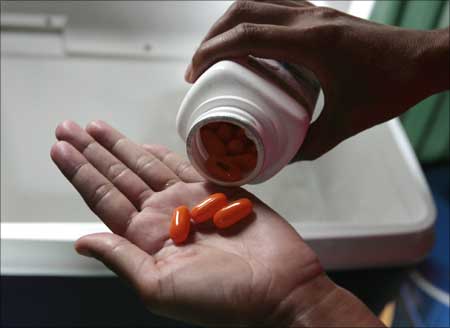
Dabur has moved quickly to take advantage of the ban.

'Bilateral trade has suffered seriously because of the growing unrest.' 'There is a standstill on both sides amid the curfew.'

Cigarettes to hotel major ITC entered the consumer products business in 2007. In three years, it has managed to corner a two per cent market share.
Most of the labourers in manufacturing plant are migrant workers. With them moving back to native places, there is going to be a huge challenge.

As Covid-19 cases surge in India, companies have realised it's a tightrope walk between maintaining production and ensuring employee safety.

"Some vidharmis are constantly hurting Hindu sentiments. The video 'Madhuban me Radhika nache' is one such condemnable attempt. I am warning Sunny Leone ji, Shaarib and Toshi ji to understand. If they don't remove the song after apologising in three days, then we will take action against them," Mishra told reporters when asked about the song.

'We aim at establishing India as an early talent hub on a global scale and are actively recruiting professionals in areas like cybersecurity, machine learning, data science, and other relevant fields.'

The case of phishing involves a senior manager with Dabur India Ltd, Sahibabad, who lost about Rs. 8 lakh in the fraud.

Pradip Burman belongs to one of India's most illustrious business families, one which runs the noted Dabur brand of mostly Ayurveda-based FMCG products.

A major reason for the high growth in advertising spends as these companies are keen on higher volume
Besides, the ongoing war between Russia and Ukraine has also added another blow to FMCG makers as they expect a rise in the prices of wheat, edible oil and crude. Companies such as Dabur and Parle are watching the situation and will undertake calibrated price increases to mitigate the inflationary pressures.
Asian Paints, Cipla, Bharat Forge, Dabur India, Nicholas Piramal and Satyam Computer Services are among the 20 Indian corporate entities that have found place in Forbes' list of 'Best Small Asian Companies'.

If he tenders an apology, we are going to think over it, said Madhya Pradesh HM Narottam Mishra.

After a turnaround in performance by Indian equity markets since July that has seen the S&P BSE Sensex and the Nifty50 wipe out the year-to-date losses, analysts suggest investors start nibbling into stocks that are focused on the domestic economy. While they say intermittent corrections, led by policies of global central banks and other economic data, cannot be ruled out, analysts expect India's relative outperformance among global equity markets to continue as it looks better placed with a healthy economic recovery, and remains one of the fastest growing major economies. In this backdrop, Neeraj Chadawar, head of quantitative equity strategy at Axis Securities, believes that amid global slowdown, aggressive tightening by the central banks, and preference for domestic interests first (by the local government), export-oriented themes are likely to be muted or will deliver conservative returns in the near-term.
The Jyothy Laboratories' IPO should bring decent returns to the investor.
The sharp rise in flexible packaging prices, thanks to the crude oil spiral, has become a new headache for fast-moving consumer goods (FMCG) companies.
